
Two red, flaky patches. To the naked eye, almost twins. But one will calm down with an anti-fungal shampoo, and the other will laugh at it and need a completely different treatment. That is the whole game with psoriasis versus seborrheic dermatitis — and the clue is often as simple as one question: is it dry, or is it greasy?
Get that one right and you are already halfway to the correct treatment. Get it wrong and you can spend months on the wrong cream wondering why nothing works. (You are not alone there — one patient summed up the chaos perfectly: "My dermatologist said seborrheic dermatitis. My primary care doctor said psoriasis.")
So let's settle it. Only a clinician can diagnose you, but knowing what actually separates the two means you walk in asking the right questions.
The one-word test: dry or greasy?
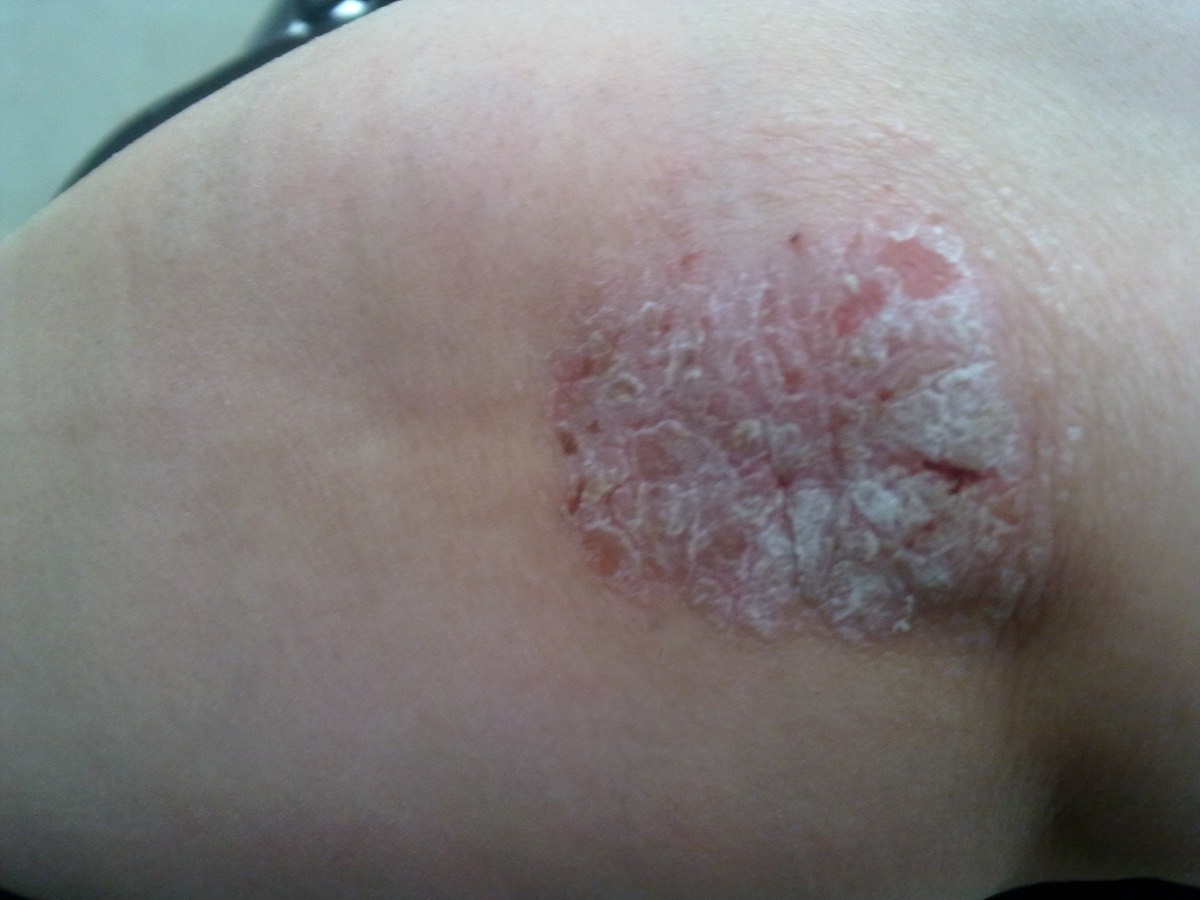
This is the fastest tell, and it comes down to oil. Seborrheic dermatitis is driven by Malassezia, a yeast that feeds on the skin's natural oil — so it shows up greasy, with soft, yellowish scale that wipes away easily. Psoriasis is an autoimmune pile-up of skin cells, so it is dry, with thick, silvery-white scale that clings. One person on r/Psoriasis put it better than any textbook: seb derm scale is light and comes off easily, while psoriasis forms "thick plaques more akin to lichen growing on rock."
Pro tip: run a dry fingertip over a fresh patch before you wash it. Soft, greasy, yellow flakes that smear → seborrheic dermatitis. Dry, thick, silvery scale that clings — and stings or bleeds when you lift it → psoriasis.
The fast comparison
| Psoriasis | Seborrheic dermatitis | |
|---|---|---|
| Texture | Dry, thick, silvery-white scale that sticks | Greasy, thin, yellowish scale that wipes off |
| Edges | Sharp, clearly defined plaques | Diffuse, fuzzy boundaries |
| Where | Extensor sides — elbows, knees — plus scalp, lower back, nails | Oily zones — sides of nose, eyebrows, ears, chest, scalp |
| Feel | Itches and stings or feels sore — "like an insect bite" | Itches or mildly burns, rarely sore |
| Family history | Often runs in the family | No real hereditary pattern |
| Nails | Pitting, thickening, lifting | Normal |
| What treats it | Steroids, vitamin D creams, coal tar | Anti-fungal / ketoconazole; barely responds to steroids |
Where they like to live
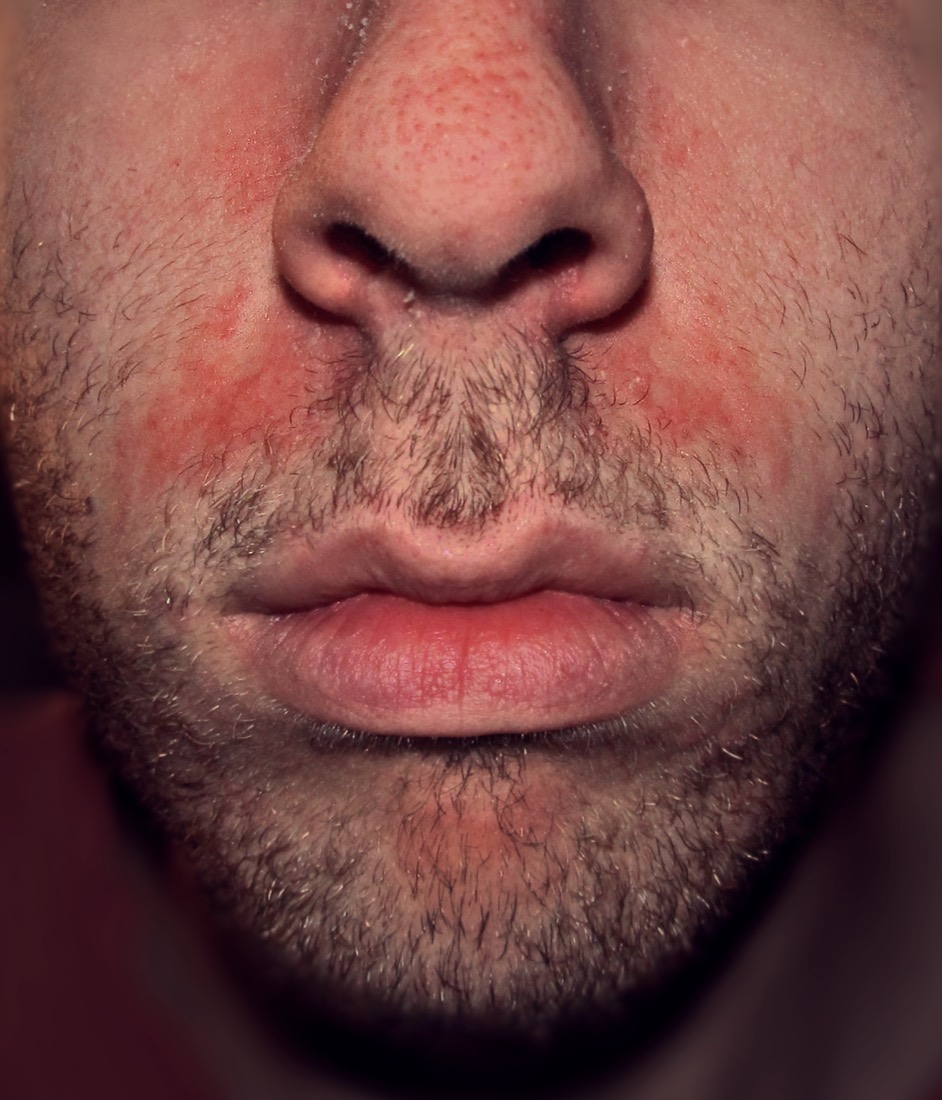
Location is one of your best clues, because the two have favourite addresses. Seborrheic dermatitis colonises the oily map of the face — the creases beside your nose, the eyebrows, the ears, the hairline and the centre of the chest. Psoriasis prefers the outsides of joints — the outer elbow and knee, the lower back — and it has one signature seb derm never touches: the nails (tiny pits, thickening, lifting off the bed). If your rash sits on your eyebrows and nose folds, think seb derm. If there is also a dry, scaly plaque on your elbow or a pitted nail, think psoriasis.
The itch that stings
Both conditions itch, so itch alone settles nothing. The tie-breaker is a second sensation: psoriasis tends to sting or feel sore, almost like a bite, especially where the plaque cracks. Seborrheic dermatitis is more of a plain itch, sometimes a mild burn, but rarely that raw soreness. As dermatologists put it, both may itch — but only psoriasis stings.
When the rash picks your diagnosis for you
Here is the trick the textbooks underplay: the two respond to opposite treatments, so what works is itself a clue. Seborrheic dermatitis is kept in check by anti-fungal shampoos and creams (ketoconazole, zinc) and shrugs off steroids. Psoriasis is the reverse — it responds to steroids, vitamin D creams and coal tar, while anti-fungals do little. So if a few weeks of a proper anti-fungal clear it up, it was almost certainly seb derm; if it ignores the anti-fungal and only a steroid touches it, that points hard at psoriasis. (One genuine overlap: coal tar helps both — and you can have both at once, a combo called sebopsoriasis.)
Why even doctors disagree
If two of your own doctors give you different answers, that is not incompetence — it is a genuinely hard call. On the scalp, with no rash elsewhere, the two can look nearly identical, and even a biopsy only tips the odds rather than settling it cleanly (histopathology study, 2016). They affect similar numbers of people — psoriasis around 2–4%, seborrheic dermatitis about 3% — and they can coexist. This is exactly why what you bring to the appointment matters more than you'd think.
A quick self-check (not a diagnosis)
- Is the scale dry, thick and silvery, clinging to the skin? → psoriasis
- Is it greasy and yellowish, wiping off easily? → seborrheic dermatitis
- Is it on eyebrows, nose folds, ears or chest? → seborrheic dermatitis
- Is there a plaque on an elbow/knee or a pitted nail? → strongly psoriasis
- Does it sting or feel sore, not just itch? → psoriasis
- Did an anti-fungal shampoo clear it in a few weeks? → seborrheic dermatitis
For the scalp specifically — where this gets hardest — see scalp psoriasis vs dandruff, and for the other big look-alike, psoriasis vs eczema.
What to do next
- See a dermatologist if it is not clearing. Skin is their job, and this is one of the harder calls to make from a single glance.
- Don't strip the scale right before your appointment — let the rash show its real texture (greasy vs dry is half the diagnosis).
- Bring a record. Skin shifts week to week, and "it's been flaky for a while" gives a doctor little to work with. A few weeks of photos of the same patch, plus notes on where it is, how it feels (sting vs plain itch) and what you've tried, turns a vague complaint into something a dermatologist can read at a glance. That is exactly what MySkinly is built to capture — so you arrive with evidence instead of memory, whether it turns out to be psoriasis, seb derm, or both.
Two rashes, one question — dry or greasy. Answer that honestly and you have already done the hardest part of telling them apart.
FAQ
What is the main difference between psoriasis and seborrheic dermatitis?
Texture and oil. Psoriasis is dry, with thick silvery scale and sharply defined plaques, and it often stings. Seborrheic dermatitis is greasy, with thinner yellowish scale and fuzzy edges, sitting on oily areas like the face and scalp. They also respond to opposite treatments.
Can you have both psoriasis and seborrheic dermatitis?
Yes — when they overlap it is called sebopsoriasis. It is fairly common on the scalp, which is part of why the two are so often confused, and a dermatologist may need a closer look or a biopsy to sort it out.
How do treatments tell them apart?
Seborrheic dermatitis responds to anti-fungal shampoos and creams (like ketoconazole) and barely to steroids; psoriasis responds to steroids, vitamin D creams and coal tar but not to anti-fungals. Coal tar helps both. So which treatment works is itself a strong clue to the diagnosis.
Is seborrheic dermatitis a type of psoriasis?
No. Seborrheic dermatitis is a common, yeast-driven form of dermatitis (dandruff is its mildest version), while psoriasis is an autoimmune disease. They can look alike and even coexist, but they are different conditions with different causes.
Image credits: Skincare photo — Shixart1985, CC BY 2.0. Plaque psoriasis on the elbow — Alborz Fallah, CC BY-SA 3.0. Seborrheic dermatitis on the face — Roymishali, CC BY-SA 3.0. All via Wikimedia Commons.